

Why Clogged Dryer Vents Are a Fire Hazard?

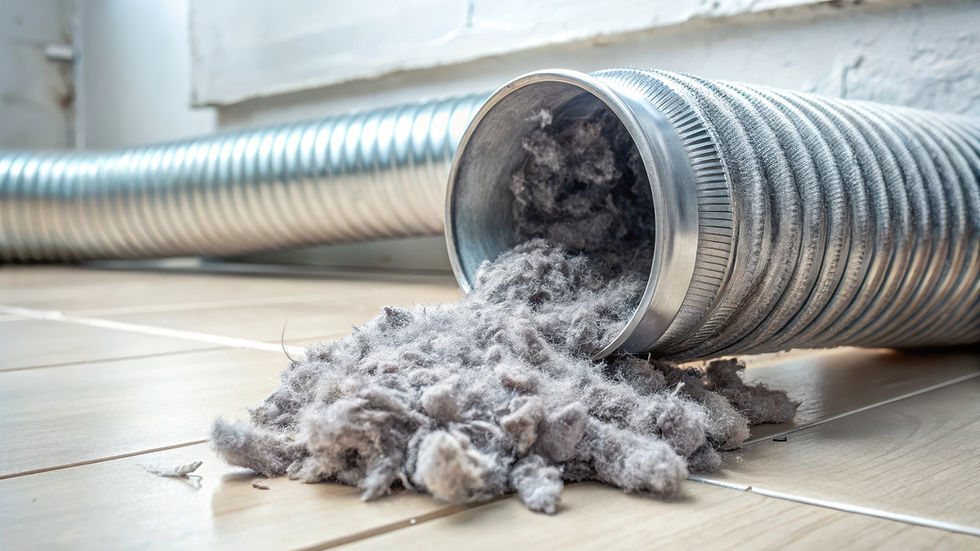
You probably check your dryer's lint trap after every load. That's good — but it's also the part of the system that matters least when it comes to fire risk. The lint trap catches maybe half of what your dryer produces. The rest travels through the vent line, and if that line hasn't been cleaned in a while, it's accumulating exactly the kind of fuel that doesn't need much to ignite.
Let's get specific about why clogged dryer vents are a fire hazard, because the mechanism is more straightforward — and more common — than most homeowners realize.
Why Clogged Dryer Vents Are a Fire Hazard: The Mechanics of It
A dryer works by pushing hot air through wet laundry and venting that moist, lint-laden air outside through a duct. When that duct is clear, airflow carries lint particles out of the system before they can accumulate anywhere dangerous. When the duct is partially blocked — which happens gradually, load after load, as lint builds up on duct walls and around bends — two things happen at once: the dryer's heating element has to work harder and run hotter to compensate for reduced airflow, and a growing mass of dry, compressed lint sits directly in the path of that heat.
Lint itself is highly combustible. It's essentially compressed fiber dust, and dryer heat combined with a spark from electrical components, a buildup of excess heat from a blocked vent, or just enough sustained high temperature is what causes ignition. This isn't a rare freak event — it's one of the most common and well-documented causes of residential dryer fires.
The Part of the System Most People Never Think About
Here's what separates a thorough understanding from the basic "clean your lint trap" advice: the lint trap only addresses what's visible inside the dryer itself. The actual vent line — running from the back of the dryer to wherever it exhausts outside, sometimes a straight few feet, sometimes a longer run with multiple turns — is where the real accumulation happens over months and years, completely out of sight. A homeowner who diligently empties the lint trap after every load can still be sitting on a seriously clogged vent line, because the two aren't connected in the way most people assume.
Vent length and configuration matter more than most people realize. Longer duct runs, vents with multiple 90-degree turns, or vents that pass through walls or ceilings before exiting create more surface area for lint to catch and accumulate. Dryer vent cleaning specifically targets this hidden section of the system that the lint trap can't reach.
Reduced Airflow Doesn't Just Mean Longer Drying Times
Most homeowners notice a clogged vent because clothes take two or three cycles to dry instead of one. That's a real signal, but it's easy to write off as "the dryer's getting old" rather than connecting it to a fire risk. The truth is that extended drying times and fire risk come from the exact same cause — restricted airflow — they're just two different symptoms of it. A dryer running longer to compensate for poor airflow is also a dryer generating more cumulative heat exposure on the lint sitting inside that blocked duct.
Why This Matters More for Certain Homes Than Others
Vent configuration varies a lot by home design. Homes in Denver and Thornton with dryers located in basements or interior laundry rooms often have longer vent runs to reach an exterior wall, which means more linear feet and often more turns where lint can accumulate. Homes with dryers on upper floors face a similar issue if the vent has to travel down or across before exiting. If your dryer isn't located near an exterior wall, it's worth assuming your vent run is longer than average and adjusting your cleaning frequency accordingly.
How Often Is Actually Necessary
Most safety organizations recommend professional dryer vent cleaning annually for average households, with that frequency increasing for larger households doing more loads per week, homes with pets shedding additional fiber into the laundry, or homes with longer or more complex vent configurations. Waiting two or three years between cleanings — which is common, since nothing forces the issue until drying times noticeably suffer — means a meaningful accumulation of combustible material sitting in a duct that's regularly exposed to heat.
The Connection Between Dryer Vents and Indoor Air Quality
This is the angle that's easy to overlook: a clogged dryer vent isn't just a fire risk, it's also pushing moisture and lint particulate back into your living space instead of fully venting it outside, which affects indoor air quality and can contribute to mold-friendly humidity in laundry areas. The same blockage causing the fire risk is also working against the air quality in the room the dryer sits in — which is part of why air duct cleaning and dryer vent service are often worth evaluating together rather than treating them as unrelated systems.
Warning Signs Your Vent Needs Attention Now
A few signs suggest your dryer vent has reached the point where it's a genuine hazard, not just an efficiency issue: clothes that are noticeably hotter than usual at the end of a cycle, a burning smell during operation, visible lint accumulating around the dryer's exterior vent hood, or the exterior vent flap not opening properly when the dryer runs (a sign airflow is too weak to push it open). Any of these warrants prompt attention rather than waiting for the next scheduled cleaning.
Getting Ahead of a Preventable Risk
The frustrating part about dryer vent fires is how preventable they are. Unlike a lot of home safety risks, this one has a clear, scheduled maintenance answer that eliminates the hazard almost entirely. For homeowners in Denver, Broomfield, and Thornton who can't remember the last time their vent line was professionally cleaned, that's reason enough to get it checked before drying times — or worse, the warning signs above — force the issue. Contact Precision Vac today to schedule a dryer vent inspection and keep your home's airflow safe and efficient.


Comments